Storage Containers
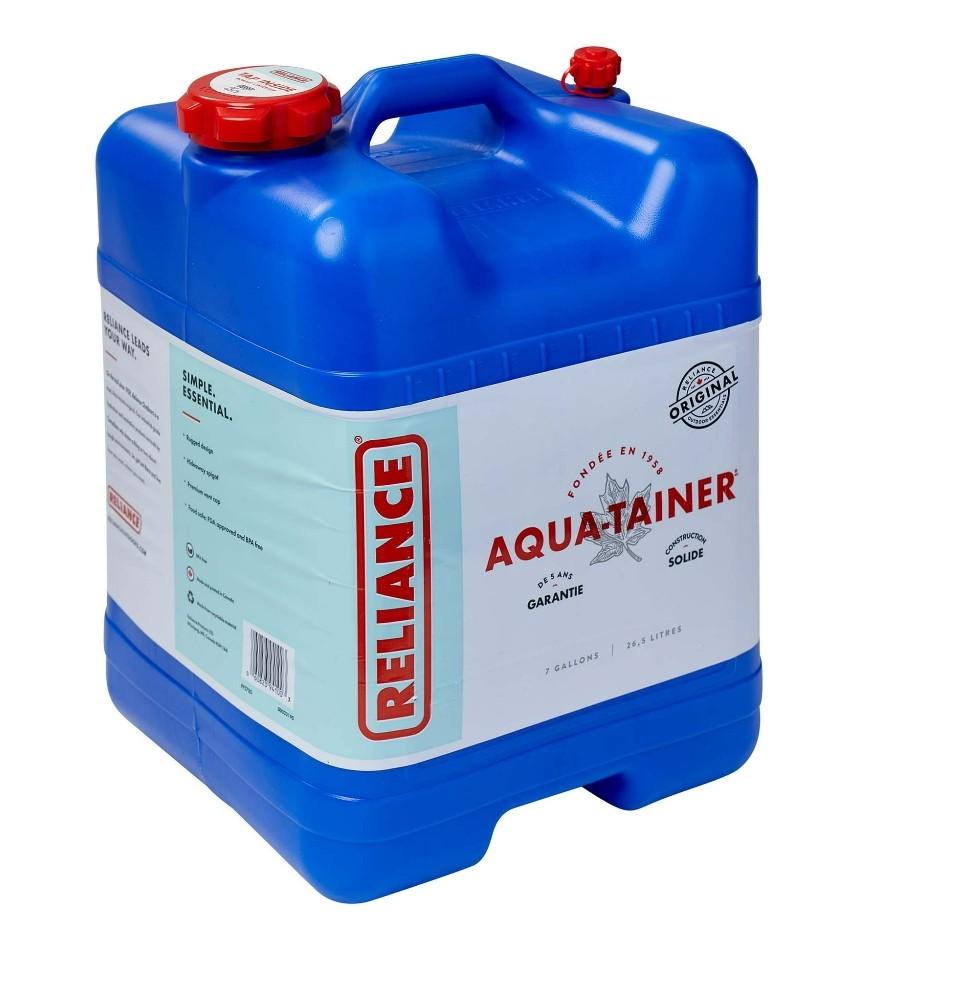
Store water in a variety of container sizes. Large containers are the most efficient use of your space but are difficult to move. Store water in smaller containers as well that are able to be carried to kitchens or restrooms where water is needed. When empty, siphon from the larger containers.
There are many different types of containers that can be used to store water. Some are better than others.
Commercially bottled water
CDC recommends that you purchase commercially bottled water to prepare the safest and most reliable emergency supply of water. Bottled water is convenient, ready to go right from the package, and is a good size for carrying. Keep the bottled water in its original container, and do not open it until you need to use it. Bottled water has a recommended two to three year shelf life. Not the water, but the bottle itself is designed to start breaking down after a number of years. Make sure you rotate and use your stores.
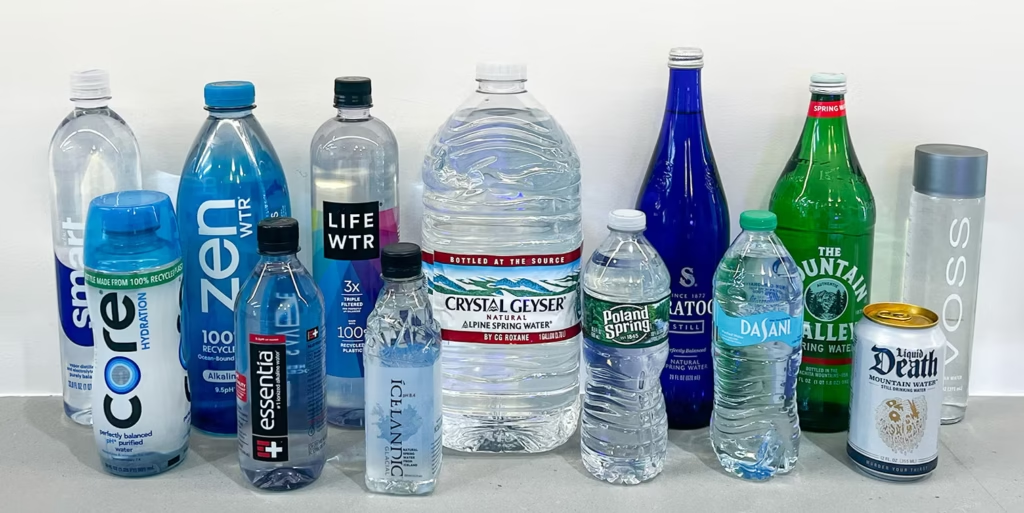
Bottled water is convenient to use, but is also a less effective use of space compared to larger containers. If you are limited in your available storage space, don’t put all of your water storage in water bottles. Additionally, even though the cost per bottle is not extravagant, it is more expensive than municipal water from your tap at pennies per gallon. Also know that a lot of commercially bottled water IS just bottled tap water.
Pre-used containers
Pre–used containers can be an inexpensive and easily accessible means of storing water if other options are difficult to come by. Larger food grade containers can sometimes be obtained from restaurants or other food preparation locations inexpensively. Take care as to which containers you choose because residual food deposits in the container may be difficult to remove. If left behind, they can promote bacterial growth in your stored water. Also, remember that your water will probably taste like whatever was in the container previously. Reconsider using containers with strong odors. You will never be able to remove them from the container.
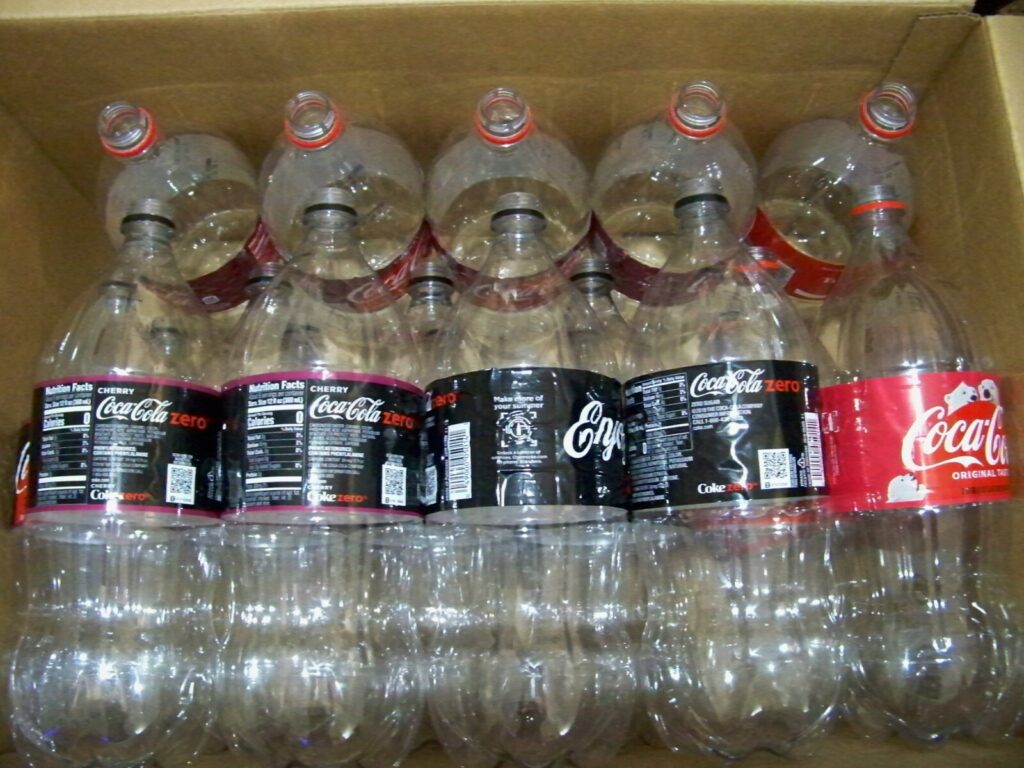
A great option for water storage are two and three liter plastic soda pop bottles. They are durable and air tight, perfect for long-term water storage. Just make sure they are completely cleaned and rinsed before filling.
DO NOT use containers which were previously used to hold chemicals or other dangerous substances. You can NEVER make it clean enough to be safe for drinking water. Some like to use these containers to store water for cleaning and sanitation purposes. That’s OK, just label them as such. If you are limited on storage space, just store drinkable water.
DO NOT use plastic jugs that had milk or fruit juice in them. The reason is that milk proteins and fruit sugars cannot be adequately removed from these containers and provide an environment for bacterial growth when water is stored in them. Also these containers quickly break down and become brittle.
Food grade plastic containers (High Density Polyethylene (HDPE))
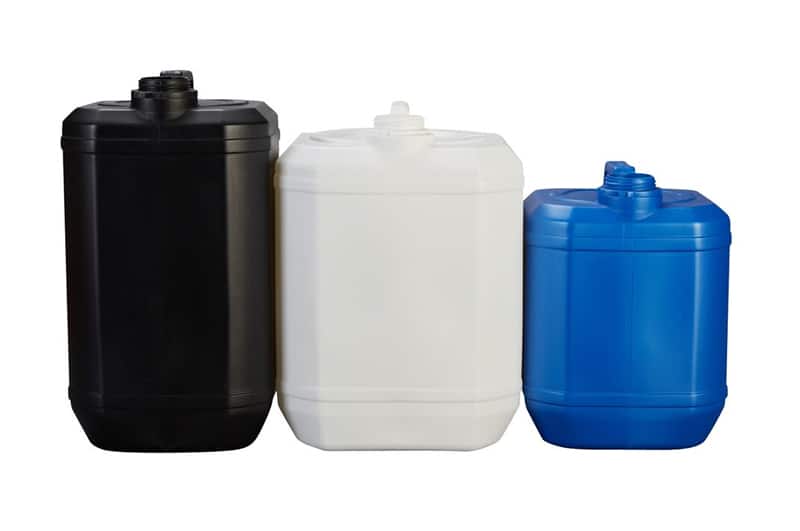
These are the standard and recommended way to store water for the long term. Look for the “2” in the recycling triangle. They are affordable and easy to find. Get dark, solid colors to block light from reaching your water.
Glass containers
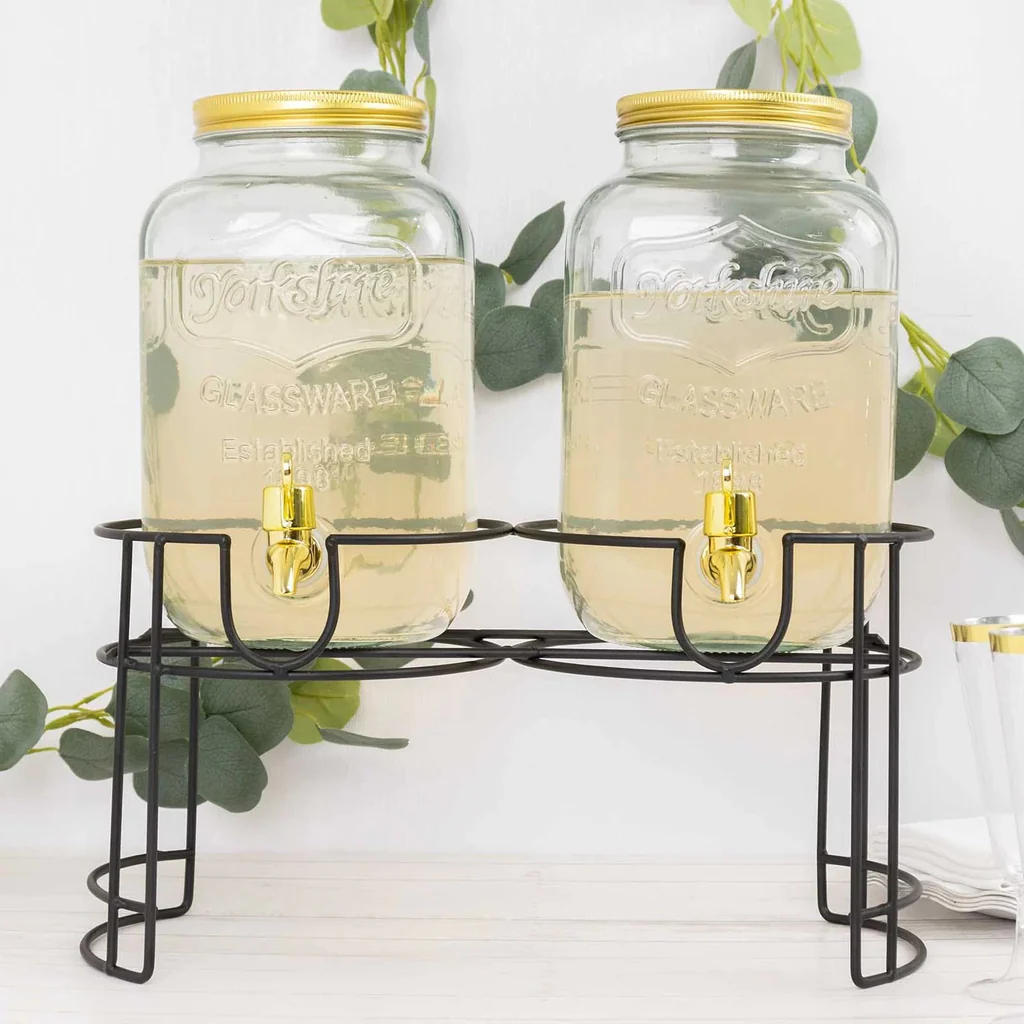
Glass containers are not as permeable as plastic and leave no taste or odor in the stored water, BUT because glass is easily broken and the broken shards are dangerous, glass is not recommended for water storage. If you choose to fill empty canning jars with drinkable water, store them on bottom shelves.
Metal containers
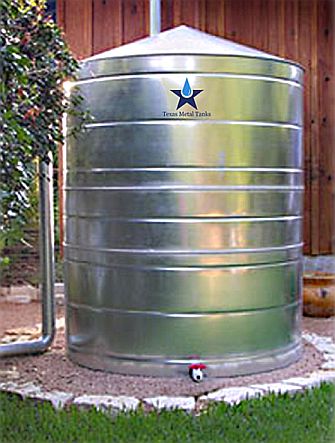
Metal containers are heavier than plastic and can leave metallic taste in stored water. There is also a possibility of rust unless you use a stainless steel container. Stainless steel water bottles are popular, but are not intended for long-term water storage. Metal containers are not recommended for water storage.
Considerations when Preparing Water Containers
There are some things you want to consider and plan for before you fill your water storage containers:
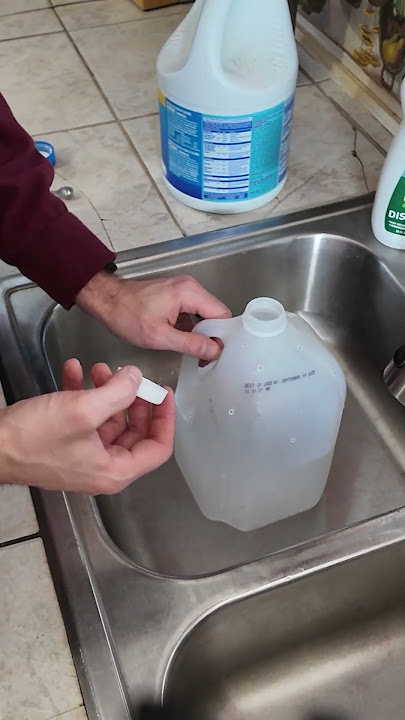
Thoroughly clean the containers
- Wash with Dish Soap: Dish soap breaks down and removes organic residues, biofilms, and particulates that could harbor bacteria if left behind.
- Use a clean, dedicated brush reserved for this purpose to avoid cross-contamination.
- Fill the container with warm water and add dish soap.
- Scrub all accessible interior surfaces, including the bottom, sides, and neck/threaded areas.
- Rinse completely to remove any residual soap which could otherwise impart taste or minor irritation to stored water.
- Sanitize with Bleach: This is advised before first use, after prolonged storage, or when preparing containers for potable water.
- Prepare a sanitizing solution mixing 1 teaspoon of unscented liquid household chlorine bleach in 1 quart of water (4 teaspoons per gallon).
- Pour the solution into the container, cover tightly, and shake well to ensure contact with all interior surfaces (including the lid and threads).
- Allow the solution to stand for at least 30 seconds (some protocols permit longer contact).
- Pour out the solution but do not rinse immediately with water
- Air-dry or rinse with clean water before filling.
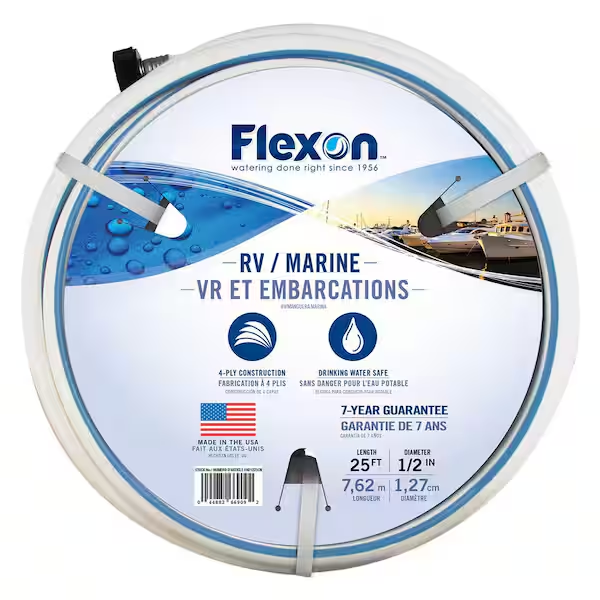
Use a drinking water hose
also known as an RV or boat hose, instead of your garden hose. At worst, even brand new garden hoses can add contaminants to your water. At best, garden hoses give your water a rubbery taste.
Fill your containers to the top
Get out as much air as possible and to keep container gaskets and seals moist to maintain a tight seal.
Treat non Chlorinated water
If your tap water is treated with chlorine, you do not need to add anything else to the water to keep it clean. If the water you are using comes from a well or water source that is not treated with chlorine, add eight drops (⅛ tsp) of unscented liquid household chlorine bleach to each gallon of water. If water is cloudy add 16 drops (¼ tsp) to each gallon of water. Make the water safe for use before storing it. Depending on the emergency, you may not have time or ability to treat the water.
Tightly close the container
Be careful not to contaminate the cap by touching the inside of it with your fingers. Label container as “drinking water” and include storage date.
Check annually
Check for odd smells, discoloration, contamination, and leaks. Replace if necessary. Be careful not to introduce contamination when checking for contamination.
Rotate
It is recommended by the CDC to replace the water every six months if not using commercially bottled water.
Examples of Water Containers
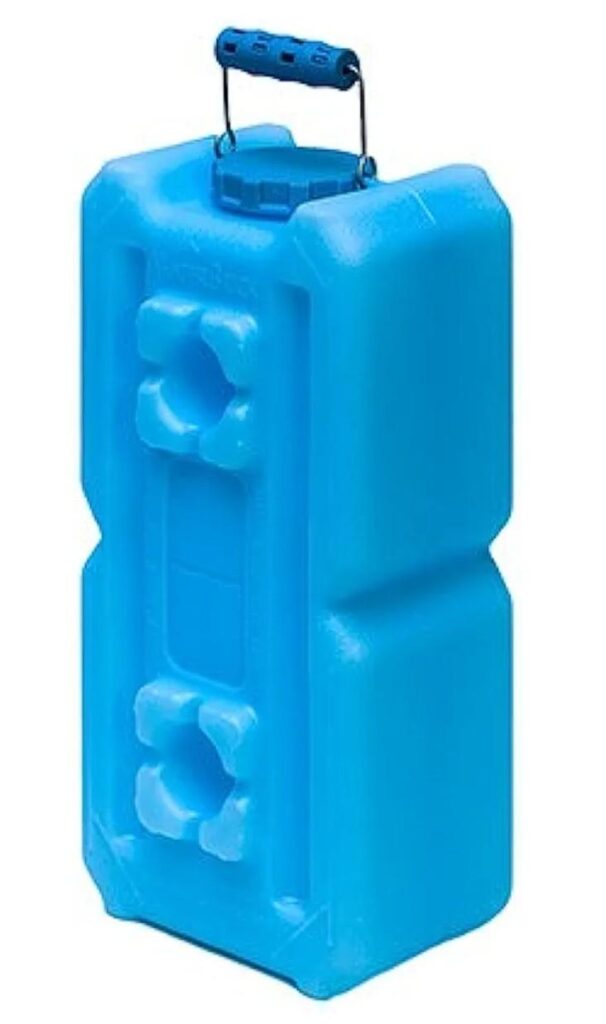
WaterBrick
Dimensions – Each unit is 9 inches wide, 18 inches long, and 6 inches high. Small enough to carry, fit in a refrigerator, and under beds.
Thickness – 1 / 8” Thick
Capacity – Each unit will hold 3.5 gallons / 13 liters of water or 27 pounds of dry food.
Stackable: Waterbricks can be stacked on top of each other – like Legos – up to 4-feet high, both perpendicularly and horizontally.
Durable: Made of industrial food grade High Density Polyethylene Resin; 5 year warranty but Ultra Violet additive will extend the life up to 15 years
Safe Dry Storage: BPA free and Food Grade approved; store water, food, or anything you want to keep dry
Multifunctional: Use as a bulk storage system, block of ice, sand bag
Average price for 6 units $126.00
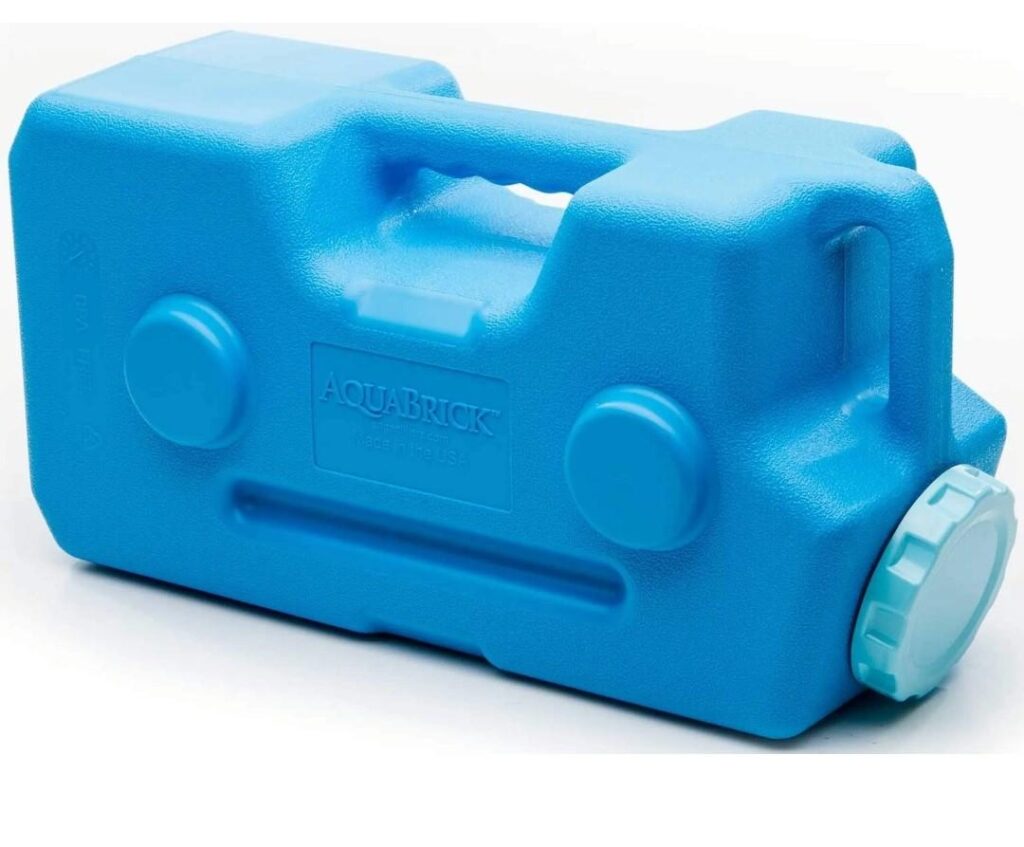
AquaBrick
Dimensions – Each unit is 9 inches wide, 18 inches long, and 6 inches high. Small enough to carry, fit in a refrigerator, and under beds.
Thickness: 1/16” Thick
Capacity – Each unit will hold 3. gallons / 11.35 liters of water or 20 pounds of dry food.
Stackable: Waterbricks can be stacked on top of each other – like Legos – Recommended stacking height is 5 bricks high.
Durable – Made of industrial food grade High Density Polyethylene Resin;
Safe Dry Storage – BPA free and Food Grade approved; store water, food, or anything you want dry
Multifunctional – Use as a bulk storage system, also has a Water Purification system that can be purchased separately
Average price for 6 units $186.00
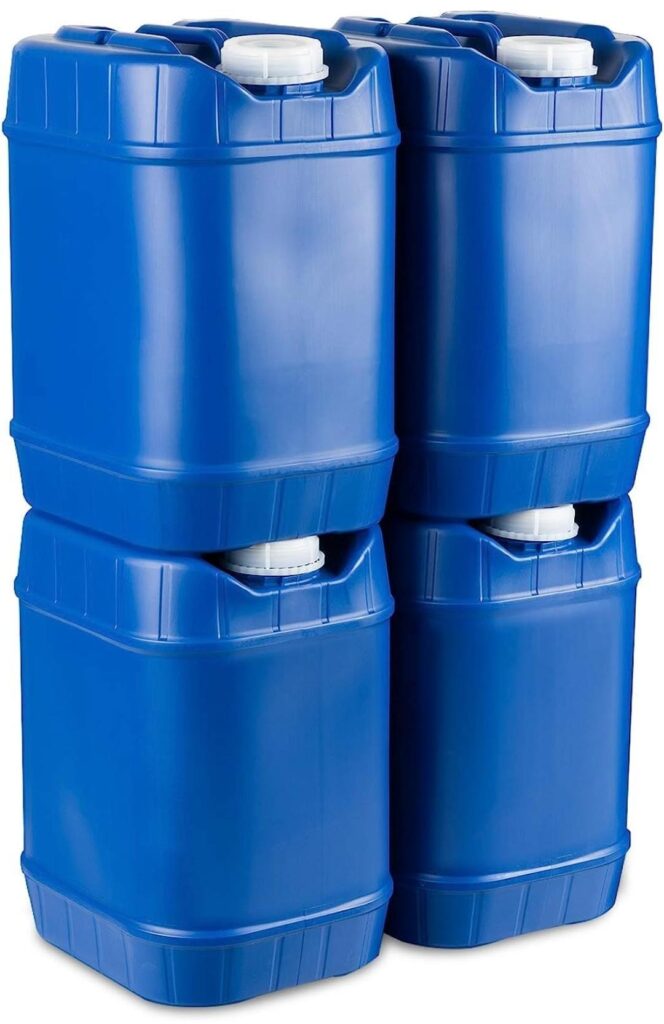
Stackables
Dimensions – Each unit is 11 inches wide, 10 inches long, and 14 inches high.
Capacity – Each unit will hold 5 gallons / 18.92 liters
Stackable – Stackables can be stacked on top of each other. Recommended maximum stacking height is 3 unit high
Durable – Made of industrial food grade High Density Polyethylene Resin with flat bottoms and tops that nestle together and molded handle.
Safe Dry Storage – BPA free and Food Grade approved;
Multifunctional – Can be used for storing other liquids or food necessities.
Prices range from $170.00 to $194.00 for 6 units
Aqua-Tainer
Dimensions – Each unit is 11 inches wide, 11.25 inches long, and 15.25 inches high.
Capacity – Each unit will hold 7 gallons / 26 liters
Stackable when empty for comp[act storage
Durable – AquaTainer is made tough and rugged. The Contoured Built-in handles makes it easy to carry. The spout is designed for convenient dispensing when needed and is reversible for safe, damage-free storage and transport. Five-year warranty against manufacturer’s defects.
Safe Dry Storage – BPA free and Food Grade approved; Multifunctional – Useful for several different applications
Average Price $19.99