Many people avoid thinking about aging, often focusing on retirement as a time for freedom, travel, new hobbies, and enjoying grandchildren. However, we rarely plan for the years that come after retirement. It’s important to recognize that health challenges are a natural part of aging, and preparing for them ensures you have the resources to receive the type of care you want.
Begin considering what you want your later years to look like, and have open conversations with your family—especially if you’d like them involved in your plans. Designate a portion of your retirement savings to support your preferred living arrangements and care as your health changes. Remember, creating a plan of care is not a one-time task; your needs and resources will change over time, so your plan should evolve as well.
While these conversations can sometimes be uncomfortable, involving your family and clearly expressing your wishes—either one-on-one or in a group setting—helps them understand your preferences and how they can support you both emotionally and physically.
Misunderstandings or disagreements often arise in families when the plan of care isn’t clearly communicated or when members aren’t on the same page.
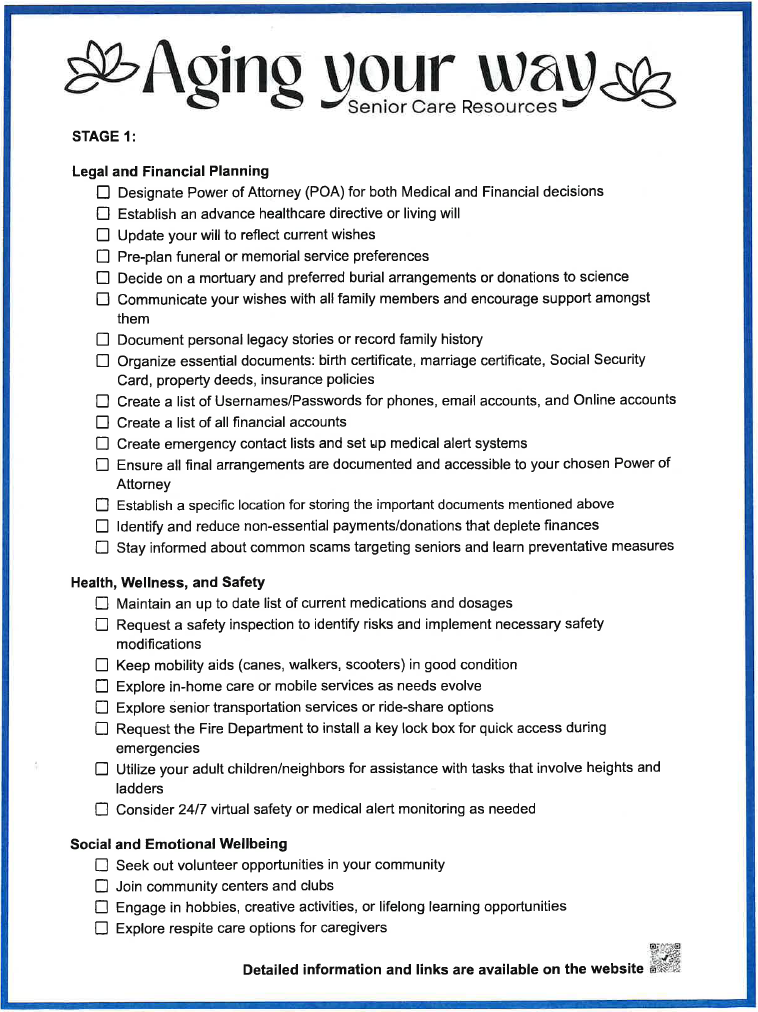
Below are items from the checklist in greater detail including things to consider, forms to fill out and resources available.
Some resources listed we can vouch for while others are found on Google. We can’t vouch for the quality of care, or service provided.